


Quick answer
Civil work covers structure, masonry, plaster, flooring, plumbing and electrical; interior fit-out covers false ceilings, joinery, furniture and décor. A turnkey contractor can coordinate both.
On this page
Key takeaways
- Civil: structure and services
- Interiors: finishes and furniture
- Coordinate early
- One contract saves time
01What Civil Work Actually Covers
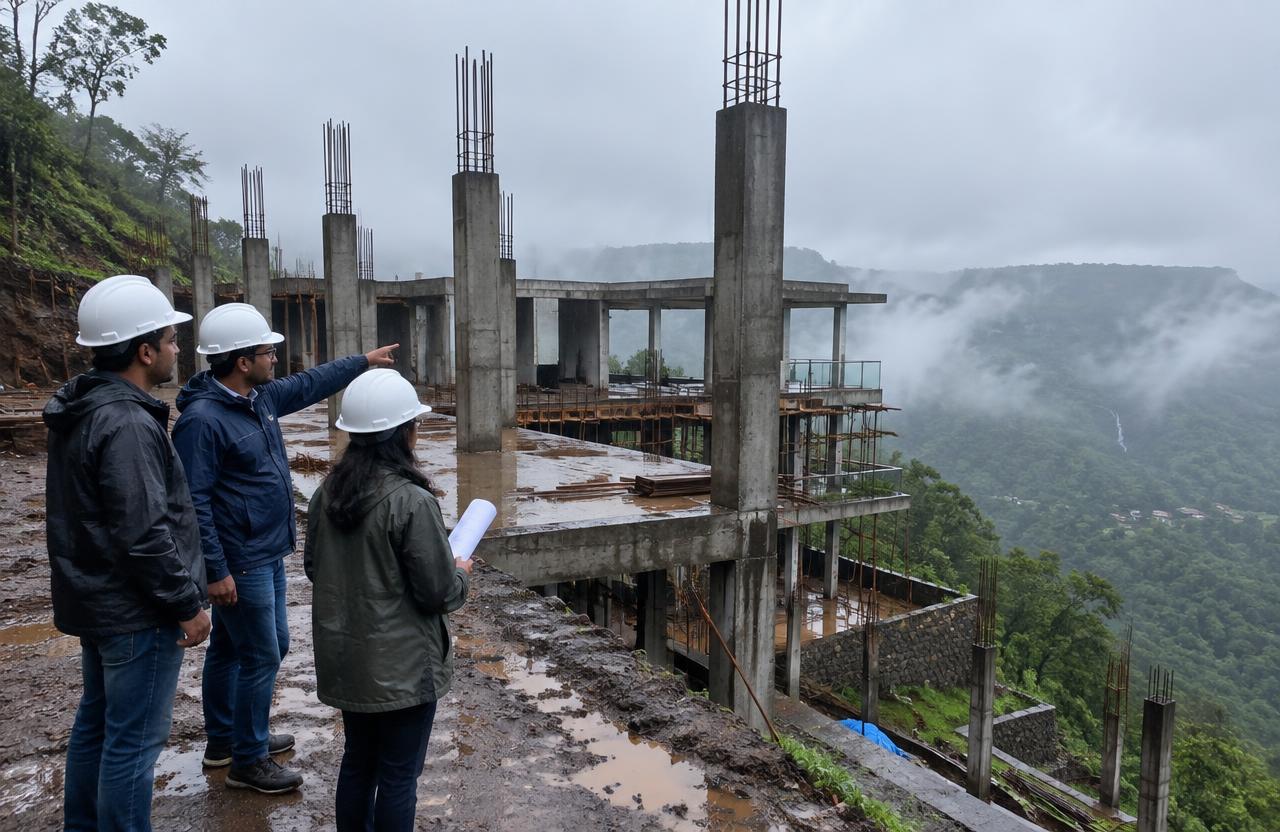
Civil work and interior fit-out are frequently quoted and contracted as if they're the same trade, but they cover genuinely different scopes with different skill sets, timelines, and risk profiles. Civil work is everything that makes the building structurally sound and functional at a basic level: the RCC frame, masonry walls, plaster, floor screeding and tiling, plumbing lines (water supply and drainage), and electrical conduiting and wiring up to switch points. This work has to happen in a fixed sequence — structure before masonry, concealed plumbing and electrical before plastering closes the walls — and mistakes here are expensive and sometimes impossible to fix without breaking finished work.
02What Interior Fit-Out Actually Covers
Interior fit-out starts where civil work stops: false ceilings, modular or carpentry-built wardrobes and kitchens, decorative lighting fixtures, wall finishes beyond basic paint (wallpaper, panelling, cladding), and furniture and décor. Fit-out is far more design-driven and flexible — it can be revised, upgraded, or redone without touching the building's structure — which is exactly why it should be planned, not necessarily executed, well before civil work finishes.
03Why Coordination Timing and a Single Contractor Matter
The coordination point that most owners get wrong is sequencing: false-ceiling electrical points, AC ducting routes, and modular kitchen plumbing and electrical positions all need to be finalized and roughed-in during the civil electrical and plumbing stage, not after. Deciding the kitchen layout only once civil work is complete routinely means breaking newly plastered walls to reposition a point — a completely avoidable cost. This is the practical argument for a single turnkey contractor managing both scopes under one contract: it isn't just convenience, it eliminates the handoff gap between a civil contractor and an interior contractor where neither takes responsibility for coordination, and it compresses the overall timeline since fit-out trades can start finishing work the moment civil clears a zone instead of waiting for a formal, separate mobilization.
04How this applies to your project
Every plot is different — soil, access, approvals and budget change the right answer. PuneConstructions's engineers review your site and drawings and explain the options with costs, so you can decide with confidence.
Get a free site visit in Pune, PCMC & nearby
PuneConstructions is a civil construction company and turnkey contractor serving Pune, PCMC & nearby and the wider Pune region since 2009. Share your plot or building details and a project engineer will visit, check feasibility and send a line-item BOQ within 7 working days — no obligation.
Frequently asked questions
What exactly counts as civil work versus interior fit-out?
Civil work covers the RCC structure, masonry, plaster, floor screeding and tiling, plumbing lines, and electrical conduiting up to switch points. Interior fit-out covers false ceilings, modular carpentry, decorative lighting, decorative wall finishes, and furniture — work that can be revised later without touching the building's structure.
When should I finalize my modular kitchen layout if I'm also doing civil work?
The kitchen's plumbing and electrical points need to be finalized and roughed-in during the civil electrical and plumbing stage, before plastering closes the walls. Deciding the layout only after civil work is complete routinely means breaking newly plastered walls to reposition a point.
Is it better to hire one turnkey contractor for both civil and interiors?
Yes, generally — a single turnkey contractor eliminates the handoff gap where neither a separate civil contractor nor a separate interior contractor takes responsibility for coordination, and it compresses the timeline since fit-out trades can start finishing a zone as soon as civil work clears it.
Does PuneConstructions help with this?
Yes. We offer free site visits, feasibility advice and a line-item BOQ across Pune, PCMC, Panchgani, Mahabaleshwar, Bhor and nearby areas.
Where do you work?
Pune city and old peths, PCMC, Chakan–Talegaon, Lonavala, Mulshi, Bhor, Panchgani, Mahabaleshwar and surrounding towns.