
Quick answer
Good landscaping combines native plants, efficient irrigation, stone hardscape and storm-water drainage — especially important on hill sites.
On this page
Key takeaways
- Native plants
- Drip irrigation
- Stone pathways
- Drainage first
01Why Drainage Planning Comes Before Planting
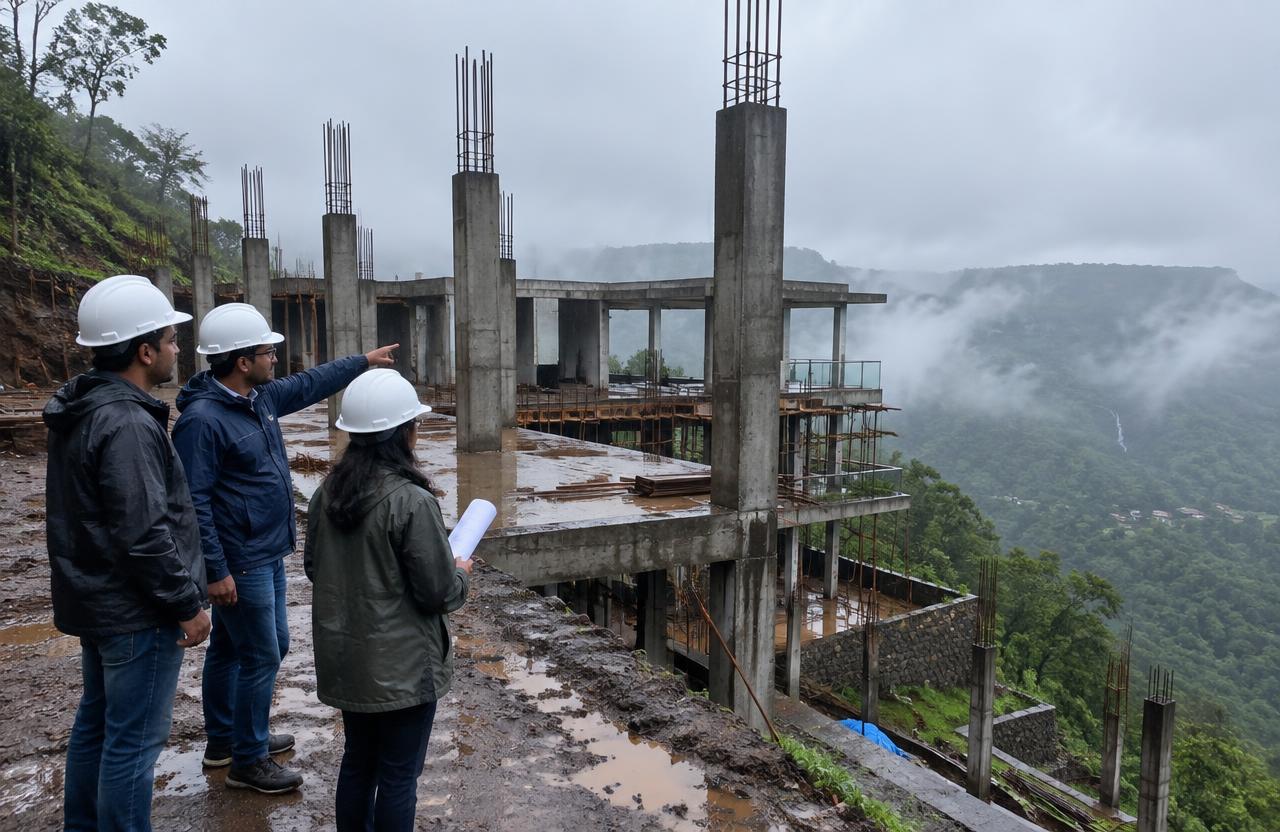
Good landscaping for villas and resorts, especially on hill or semi-hill sites common around Pune's weekend-home belts (Lonavala, Panchgani-adjacent areas, Mulshi), starts with drainage planning before a single plant or paving stone goes in — storm-water from monsoon rainfall on a sloped site, if not channelled deliberately, erodes topsoil, undermines retaining walls, and can direct water straight toward the building's foundation, so grading, catch drains and discharge points need to be part of the civil design, not an afterthought added once the garden is being planted. Native and climate-adapted plant species (rather than imported ornamentals that demand heavy irrigation and are poorly suited to the region's distinct dry and monsoon seasons) establish faster, survive Pune's hot pre-monsoon months with less water stress, and generally need less ongoing maintenance input once established.
02Efficient Irrigation and Choosing the Right Hardscape
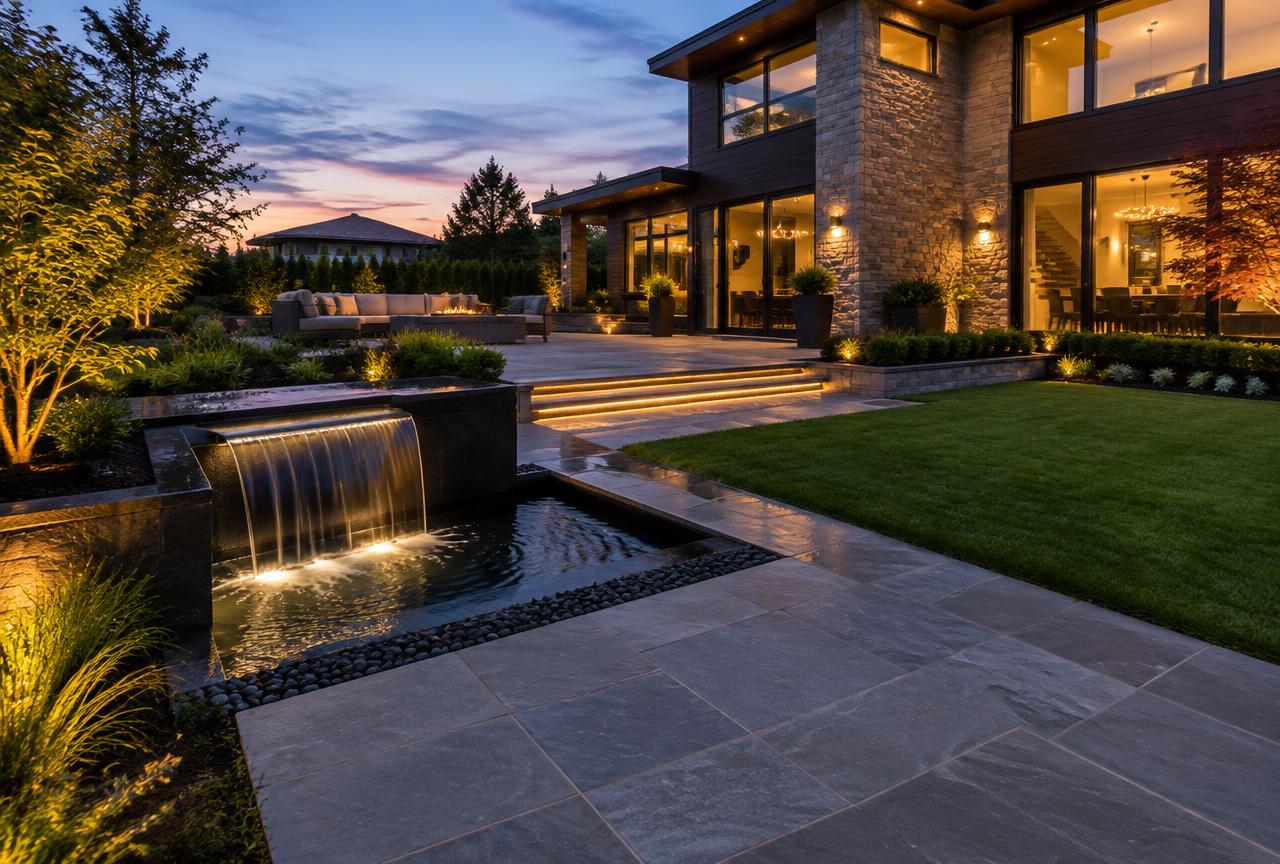
Drip irrigation is the standard efficient-irrigation approach for villa and resort landscaping because it delivers water directly to the root zone with minimal evaporation loss compared to sprinkler systems, and it can be zoned and automated with a simple timer-based controller so different plant groups (lawns, hedges, specimen trees) get appropriately different watering schedules rather than one blanket regime that over-waters some areas and under-waters others. Stone hardscape — pathways, seating walls, water features — using locally available basalt, kota stone or similar regional stone is both more cost-effective than imported materials and visually consistent with the surrounding landscape, and on hill sites, dry-stacked stone retaining walls (as opposed to purely vertical RCC retaining walls) can double as both slope stabilisation and a landscaping feature when detailed well.
03The Hill-Site Mistake That Ruins Pathways and Hardscape
On sloped or hill-site properties specifically, every hardscape and planting decision should be checked against the site's drainage plan first: a beautifully laid stone pathway that cuts across a natural water channel without a culvert or cross-drain will fail — either eroding out or diverting water toward a structure — within one or two monsoon seasons, and this is one of the most common and expensive landscaping mistakes seen on hill-site villas, usually requiring the pathway to be dug up and relaid with proper drainage once the damage becomes visible.
04How this applies to your project
Every plot is different — soil, access, approvals and budget change the right answer. PuneConstructions's engineers review your site and drawings and explain the options with costs, so you can decide with confidence.
Get a free site visit in Pune, PCMC & nearby
PuneConstructions is a civil construction company and turnkey contractor serving Pune, PCMC & nearby and the wider Pune region since 2009. Share your plot or building details and a project engineer will visit, check feasibility and send a line-item BOQ within 7 working days — no obligation.
Frequently asked questions
Why does drainage matter so much for landscaping on a hill or sloped villa site?
Monsoon storm-water on a sloped site, if not channelled deliberately through grading and catch drains, erodes topsoil, undermines retaining walls, and can direct water straight toward the building's foundation. Drainage planning needs to happen as part of the civil design before any plant or paving stone goes in, not as an afterthought once the garden is being laid out.
Is drip irrigation really necessary, or can I just use sprinklers for a villa garden?
Drip irrigation delivers water directly to the root zone with far less evaporation loss than sprinklers, and it can be zoned so different plant groups get appropriately different watering schedules rather than one blanket regime. For Pune's distinct dry and monsoon seasons, this efficiency matters both for water cost and for keeping native, climate-adapted plants properly established.
What's a common and expensive landscaping mistake on hill-site properties?
Laying a stone pathway or hardscape feature across a natural water channel without a culvert or cross-drain is one of the most common mistakes — it typically fails within one or two monsoon seasons, either eroding out or diverting water toward a structure. Every hardscape decision on a sloped site should be checked against the drainage plan first, since relaying a failed pathway with proper drainage afterward costs considerably more than getting it right initially.
Does PuneConstructions help with this?
Yes. We offer free site visits, feasibility advice and a line-item BOQ across Pune, PCMC, Panchgani, Mahabaleshwar, Bhor and nearby areas.
Where do you work?
Pune city and old peths, PCMC, Chakan–Talegaon, Lonavala, Mulshi, Bhor, Panchgani, Mahabaleshwar and surrounding towns.