
Quick answer
For Pune terraces, the most reliable systems are polyurethane or APP membrane with protective screed, or brickbat coba with a modern coating. Expect ₹60–₹180 per sq.ft. and a 5–10 year guarantee.
On this page
Key takeaways
- PU membrane: flexible, long-life
- APP membrane: robust, needs protection
- Brickbat coba: traditional, heavy
- Always do a 48-hour ponding test
01PU and APP membrane: how they compare
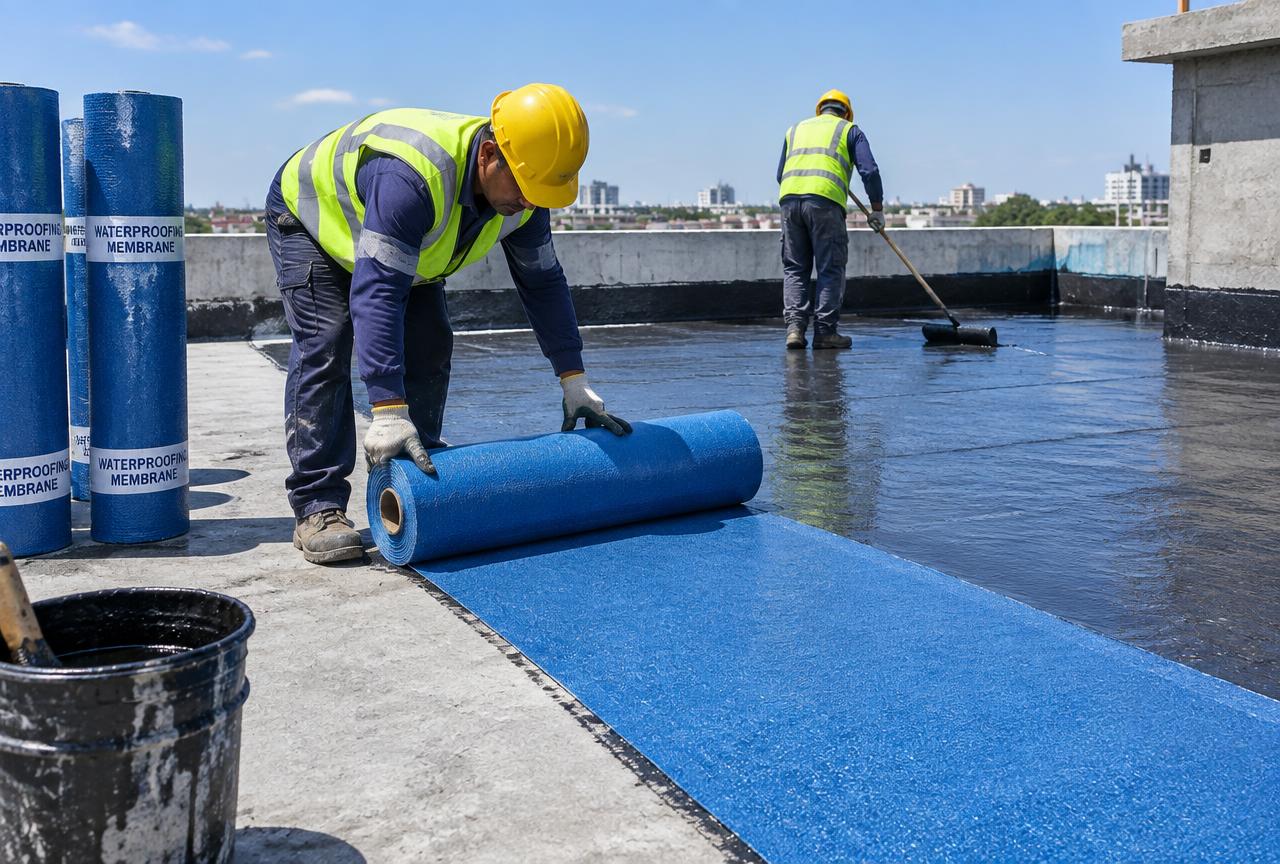
The method that suits a terrace depends mainly on how much you're willing to spend upfront versus how long you want it to last without redoing. Polyurethane (PU) liquid-applied membrane cures into a flexible, seamless film that moves with the slab's thermal expansion and contraction — important in Pune's wide day-night temperature swing — and, properly top-coated against UV, typically lasts 7–10 years at a cost of roughly ₹80–₹180 per sq.ft. APP (modified bitumen) membrane, torch-applied in rolls, is a more robust, thicker barrier that handles ponding water well but degrades under direct UV exposure, so it must be protected with a screed or paver tiles over it; it runs cheaper, around ₹60–₹120 per sq.ft., but only if that protective layer is actually installed.
02Brickbat coba: the traditional heavy-duty option
Brickbat coba is the traditional method still widely used in Pune: broken brick bats are laid in a waterproofing-compound-admixed cement slurry to build the necessary slope toward drains, finished with an IPS (Indian Patent Stone) or screed top layer. It's heavy — adding roughly 75–100 mm and significant dead load to the slab, which needs to be accounted for in structural design — and labour-intensive, but when done by skilled masons it's durable and cheap per sq.ft., though quality varies more with workmanship than with the membrane systems.
03The ponding test you should never skip
Whichever method is chosen, the non-negotiable final step is a ponding test: flooding the waterproofed area with roughly 50 mm of water and leaving it for 48 hours (72 hours for larger or critical areas) to check for any leakage into the slab below before the protective screed or tiling goes on top — skipping this test is the single most common reason a terrace that was 'waterproofed' still leaks within the first monsoon, because any defect caught before tiling costs a fraction of what it costs to fix after.
04How this applies to your project
Every plot is different — soil, access, approvals and budget change the right answer. PuneConstructions's engineers review your site and drawings and explain the options with costs, so you can decide with confidence.
Get a free site visit in Pune, PCMC & nearby
PuneConstructions is a civil construction company and turnkey contractor serving Pune, PCMC & nearby and the wider Pune region since 2009. Share your plot or building details and a project engineer will visit, check feasibility and send a line-item BOQ within 7 working days — no obligation.
Frequently asked questions
Which waterproofing method lasts longest on a Pune terrace — PU, APP, or brickbat coba?
PU (polyurethane) membrane, properly UV top-coated, typically lasts 7–10 years and is the longest-lived of the liquid-applied systems at ₹80–180 per sq.ft. Brickbat coba, done by skilled masons with a proper protective screed, can also last well beyond a decade, but its durability depends much more heavily on workmanship than the membrane systems do.
Is APP membrane a bad choice if I don't want to add a screed or tiles over it?
Yes — APP membrane degrades under direct UV exposure, so it must be protected with a screed or paver tiles over it. If you're not planning that protective layer, PU membrane (which can be UV-stable on its own) or brickbat coba are better choices for an exposed, walkable terrace.
What exactly should I check during the 48-hour ponding test before accepting the waterproofing work?
Flood the terrace with roughly 50 mm of water, mark the water line, and check after 48 hours (72 for larger or critical areas) that the level hasn't dropped and there's no seepage or damp patch on the ceiling below. Only allow the screed or tiling to proceed once this test passes cleanly — checking after tiling makes any defect far more expensive to fix.
Does PuneConstructions help with this?
Yes. We offer free site visits, feasibility advice and a line-item BOQ across Pune, PCMC, Panchgani, Mahabaleshwar, Bhor and nearby areas.
Where do you work?
Pune city and old peths, PCMC, Chakan–Talegaon, Lonavala, Mulshi, Bhor, Panchgani, Mahabaleshwar and surrounding towns.